The All New BMW 4 Series convertible, a step away from the 3-Series


Sharp driving dynamics befitting The Ultimate Driving MachineTM

The defining characteristics of the new BMW 4 Series Convertible are its driving dynamics and aesthetics. As always, BMW engineers have placed special focus on steering accuracy, precision, linear control response, and agility to fortify the new BMW 4 Series Convertible as the latest shape of The Ultimate Driving Machine. Sophisticated chassis technology, near-perfect 50:50 weight distribution, fine-tuning in the wind tunnel, and lightweight construction all contribute to meet that goal.

The all-new BMW 4 Series Convertible has a longer wheelbase, wider track and lower ride height than the previous-generation BMW 3 Series Convertible. Its lower suspension brings down the car’s center of gravity. As a result, the new BMW 4 Series Convertible is inherently one of the sportiest open cars on the road.

BMW EfficientDynamics – A holistic philosophy.
In addition to its sporty driving dynamics, the new BMW 4 Series Convertible offers outstanding fuel efficiency. This is a result of the BMW EfficientDynamics development strategy, which can be found in almost every aspect of the new model. The car’s lightweight construction and aerodynamic features – headlined by the groundbreaking Air Curtains and Air Breathers – also help to maximize efficiency. At its core, the new BMW 4 Series Convertible has been engineered for performance excellence, while other features including Auto Start-Stop and on-demand operation of ancillary units help lower fuel consumption and emissions as well. Use of ECO PRO mode gives the potential to cut fuel use by as much as 20 percent.

BMW ConnectedDrive.
The new BMW 4 Series Convertible uses a combination of driver assistance systems and mobility services (available as standard or optional under the BMW ConnectedDrive banner) to increase safety, comfort and convenience of access to infotainment features. Among the optional highlights are a new generation of BMW Navigation System, which offers extra capability, sharper graphics and 3D elements for the map display, the full-color BMW Head-Up Display; Active Driving Assistant, which warns the driver of a potential collision with a pedestrian, the intelligent; LED High Beam Assistant and the latest iteration of BMW Active Cruise Control with Stop & Go. As far as infotainment is concerned, efficient interface technology enables the integration of smartphones and numerous Bluetooth office functions. The latter also offers the driver the option of a dictation function with full speech recognition. Each feature has been carefully integrated to minimize driver distraction while the vehicle is in motion.

Design: Aesthetic appeal blends with individuality and sporty ability.

The new BMW 4 Series Convertible represents the fifth generation in the heritage of modern BMW convertibles. Just like the BMW 4 Series Coupe, the new BMW 4 Series Convertible introduces new dimensions of aesthetic design and sportiness. At the same time, the new model reinforces the company’s claim to years of market leadership when it comes to designing and building premium convertibles for the mid-size segment. More than ever before, it is the design language of the BMW 4 Series Convertible that accounts for its eye-catching and powerful presence on the road. The synergy of dynamic performance with maximum driving pleasure is another milestone in the story begun by the BMW 4 Series Coupe and now being continued with the launch of the BMW 4 Series Convertible.

Athletic elegance, impeccable proportions.
The proportions of the new BMW 4 Series Convertible differ significantly from those of the outgoing BMW 3 Series Convertible. Although only an inch (26 mm) has been added to the car’s length (182.6 in / 4,638 mm), a 2-inch (50-mm) longer wheelbase (110.6 in / 2,810 mm) enhances the stretched Convertible’s profile. These dimensions combined with the BMW 4 Series Convertible’s characteristically short overhangs, long hood and set-back passenger compartment produce a visually balanced silhouette. The athletic appearance of the BMW 4 Series Convertible is particularly emphasized by its 1.7inch (43-mm) increase in the width (71.9 in / 1,825 mm). Notably, the rear wheel arches mark the car’s broadest point, giving a more aggressive stance. As a result, 1.8-inch-(45-mm) wider front track (60.8 in / 1,545 mm) and full 3.1 inches (81 mm) of extra width at the rear axle (62.7 in / 1,593 mm) promise – even at a standstill –further improvements in sporty characteristics for which BMW is known.

Eye-catching front end with prominently sporty contours.
Signature BMW front-end design features, such as the double-kidney grille and four round headlights, undoubtedly identify the 4 Series Convertible as a BMW. It is unmistakably the
3 Series’ sibling, although the differences are apparent. The optional eye-catching full-LED headlights, with their hexagonal design, and the slightly forward-slanting BMW kidney grille form a single unit and strengthen the athletic presence of the BMW 4 Series Convertible on the road. Below the headlight line, the BMW 4 Series Convertible features a large air intake in the front apron. On the far left and right-hand edges of the air intakes are the additional small vertical apertures for the Air Curtains. These vents improve the airflow around the outside of the front wheels and help cut fuel consumption at higher speeds.

Flowing lines shape the elegantly sporty silhouette.
Powerfully taut surfaces and precise, sweeping lines define the athletic outline of the BMW 4 Series Convertible. The sloping roofline stretches the car’s overall appearance and elegantly accentuates the sporting profile of the flanks. The molding at the juncture of the three-piece folding hardtop and the body is an eye-catching touch. It is available in chrome, black or brushed aluminum, depending on the model variant. Additionally, the shallow, homogeneous side window graphic with the signature BMW Hofmeister kink at the trailing edge of the C-pillar generates dynamic visual tension.

Below the windows, the double swage line inherited from the BMW 3 Series teams up with the striking door sill line to strengthen the body’s dynamic wedge shape. The car exudes dynamic elegance when the top is down, and the smooth, flowing look of the silhouette is in no way compromised by radio antennas or the roll bars, which are intelligently hidden behind the rear head restraints. Located just rearwards of the BMW 4 Series Convertible’s front wheels are Air Breathers designed to reduce drag around the wheel arches. Together, the Air Breathers and Air Curtains underline the sporting character of the car’s design and provide tangible evidence of the innovative aerodynamic solutions devised by BMW as part of the company’s EfficientDynamics development strategy. The sporting character of the BMW 4 Series Convertible extends into the powerful design of the rear. The prominent horizontal lines and broadly stretched L-shaped tail lights positioned at the outer edges of the rear draw extra attention to the muscular wheel arches and wide track.

Three-piece retractable hardtop. Form and function.

The BMW 4 Series Convertible offers outstanding everyday driving qualities and a dynamic design, with the top up or down. These seemingly contradictory qualities were already combined in the BMW 3 Series Convertible, the predecessor model that set standards for premium mid-size convertibles. The hardtop of the BMW 4 Series Convertible features a number of design improvements that reduce noise levels for a much quieter interior ambience. The sound-absorbing headliner also reduces wind noise by up to 2 dB in comparison to the predecessor model.

All it takes is the push of a button to transform a dynamic coupe into an elegant, athletic convertible in a mere 20 seconds. The top can also be lowered when the vehicle is travelling at speeds of up to 18 km/h (approx. 11 mph). The vehicle’s air resistance with the steel top up is Cd 0.28 – and it is just Cd 0.33 when the hardtop is retracted. The redesigned windblock is standard in the US.

The available three-temperature neck warmers allow for comfortable open-air driving at high speeds and low temperatures. The windblock is now smaller, lighter and easier to use, plus it is more effective than previous variants. When it is not needed, the windblock can be stored behind the rear seat to save space, which is also a new feature. The BMW 4 Series Convertible also has plenty of space in the trunk, even when the retractable hardtop is lowered. The new convertible offers wider access to the luggage compartment, and an electro-hydraulic loading assistance system raises and positions the folded hardtop in the trunk as needed to ensure maximum utilization of the 7.8 cu. ft. (220 liters) of storage space available.

The loading assistance feature makes sure that there is always ample access to the boot whether the top is up or down. Two storage compartments on the right and left of the main luggage area are also available for stowing small items when the retractable top is up.

When the top is up, the luggage compartment has a volume of 13.0 cu. ft. (370 liters) – that is 0.7 cu. ft. (20 liters) more than available in the BMW 3 Series Convertible.  All trunk volumes are based on ECE measures. Even bulky items can be transported with the BMW 4 Series Convertible. A flat and level storage area can be utilized when the backrest of the rear bench seat is folded down. The load-through feature, which is standard in the US, makes even more space available: Either a wide opening between the rear passenger compartment and the trunk, or a smaller opening, for skis for example, when four people are seated in the vehicle.

Prominently flared wheel arches project signature sporty character.
The sporty character of the BMW 4 Series Convertible extends into the design of the rear. The horizontal lines and stretched tail lights positioned at the outer edges of the rear draw attention to the flared wheel arches and wide track. The sloping rear window has a lowering effect on the car’s tail and gives the body an even more aggressive look, and also shows off the car’s shoulders. The L-shaped taillights of the BMW 4 Series Convertible flow into the car’s overall design. They continue the path of the swage line from the flanks, creating a link to the rear end.

Functional sportiness and elegance in the interior.

The interior of the BMW 4 Series Convertible blends sporting intent and exclusivity to stylish effect. An approach known as layering – the clever utilization of space through the structuring of lines and surfaces into layers – provides a natural canvas for the hallmark BMW driver focus, but is careful not to exclude the front passenger from the action. All of the controls are arranged ergonomically around the driver to provide optimum access to all functions.

A sports steering wheel, crystal-clear circular instruments in black panel look and the freestanding, flatscreen iDrive monitor, the iDrive Touch Controller – all within easy reach on the center console – underline the sense of functional elegance. The dynamic horizontal lines of the instrument panel extend into the optional two-tone door and side panel trim. This is enhanced by the retractable hardtop cover to create an exclusive “boat deck” look. The interior design wraps around the driver and front passenger in an unbroken sweep and lends the interior an engagingly dynamic feel while showcasing the typically long doors. The interplay of surfaces and lines in the car’s side panels, plus the continuation of the accent strip, creates a visual connection between the front and rear of the interior.

The completely new design of the electrically adjustable front seats in the new BMW 4 Series Convertible includes integrated retractable seat belts – a feature not available on any other vehicle in this class. If desired, the standard seats and the sport seats, included with the Sport Line and M Sport, can be equipped with neck warmers for the driver and front passenger as part of the Cold Weather Package in the US. The dynamic character of the 4 Series Convertible can also be seen in the rear compartment. The bench design is contoured to form two individual seats, with cup holders and a storage tray for small items between them. The rear head restraints are separated from the concealed roll bars and can be removed if desired. The roll bars are comprised of two massive steel elements hidden behind the rear seats – in critical situations, sensors trigger the system and the roll bars are extended in less than 200 ms.

Sport and Luxury Lines as well as M Sport available for personalization.
High-class material combinations, exclusive colors and opportunities for personalization define the premium feel inside the new BMW 4 Series Convertible. As well as the basic trim level, whose material and color concept accentuates the car’s classic character; customers have a choice of two BMW Lines as well as the popular M Sport to add individual touches to the car’s exterior and interior. The Sport Line and Luxury Line embody different takes on the car’s character, adapting the design and color scheme for the kidney grille and air intakes, exterior mirror caps, Air Breathers, trim strips in the front and rear apron, door sill strips and range of wheel rims to set the car apart externally from the basic trim level.

Sport Line: The Sport Line adds extra depth to the BMW 4 Series Convertible with a selection of exterior body features in high-gloss black. A sport suspension is included for rear-wheel drive models, setting an exciting tone for the driving experience. The standard high-gloss black B-pillars and black wrap-around window strip give the car an even sportier look, along with nine molded high-gloss black kidney grille slats in a chrome-colored surround.

The three black air intakes in the front apron and the likewise black Air Breathers draw the eye to the car’s aerodynamic features. 18-inch or optional 19-inch light-alloy wheels (435i only) in twin-spoke design provide a more performance-oriented look. From the rear, the BMW 4 Series Convertible with Sport Line can be identified by the black trim strip level with the rear apron and the black exhaust tips. Inside the car, black and red accents, such as the red trim rings in the inner circle of the instrument dials and red stitching on the sport steering wheel, provide a pronounced contrast. Sports seats are included. The available Coral Red interior includes Coral Red leather sport seats, red door panel trim and a red lower section for the instrument panel.

Luxury Line: High-gloss chrome touches give the exterior of the BMW 4 Series Convertible a particularly elegant and exclusive appeal. 11 kidney grille slats with chromed fronts and matte black sides, two high-gloss double bridges in the front apron’s outer air intakes and chromed Air Breathers all offer elegant touches. The chrome window surround is another visual highlight, with special 18-inch or optional 19-inch light-alloy wheels (435i only) available. The BMW 4 Series Convertible Luxury Line is recognized from the rear by a high-gloss chrome strip in the rear apron and the chrome exhaust tips. The interior also stands out with various chrome elements, such as the surround for the audio and air conditioning system. High-gloss wood strips, leather seats with stitching and a choice of two upholstery variants in four colors highlight the possibilities in the Luxury Line. Exclusively available for the BMW 4 Series, Ash Grain anthracite fine wood trim surfaces and a Pearl Gloss Chrome metal inlay round off the Luxury Line features.

M Sport: Customers wishing to endow their new BMW 4 Series Convertible with as much of the traditional Ultimate Driving Machine character as possible may opt for M Sport. It includes an M aerodynamic package including numerous body components (front apron with large air intakes, rear bumper with diffuser, side skirts) and high-gloss Shadow Line trim. The exterior paint shade Estoril Blue Metallic is available only with M Sport on the 4 Series Convertible. M Sport is further distinguished by 18-inch or optional 19-inch light-alloy wheels (435i only) in M design. Inside, features such as M door sill finishers, an M leather steering wheel and an M driver’s footrest complete the atmosphere. Technical features of this package include M Sport suspension (rear-wheel drive models only) and M Sport Brakes (also a stand-alone option on all 435i Convertibles and an optional upgrade on 428i Convertible when M Sport is chosen) which includes calipers painted in blue finish.

Hallmark BMW set-up makes the difference.
The new BMW 4 Series Convertible benefits from BMW’s customary approach of splitting steering and drive forces between the front and rear axles, which is the ideal platform for balanced driving characteristics, directional stability and agile handling. It also has a 50:50 weight distribution, which sets it apart from its competitors. Taking into account its low center of gravity, unique chassis set-up and lightweight construction, the 4 Series Convertible is an exceptionally dynamic overall package which will satisfy every type of driver.

A rigorous focus on sports performance.
The chassis construction of the new BMW 4 Series Convertible is based on that of the new BMW 4 Series Coupe. However, the springs and damping, axle kinematics and elastokinematics have all been tailored precisely to the character of the new convertible. Indeed, the chassis engineers have managed to make further improvements to the agility and accuracy offered by the chassis, thanks to modification and fine-tuning of variables such as the camber angle, the track and the roll center. Last but not least, special body strengthening elements in the front section and the undercarriage of the car help to further enhance steering precision and feedback.

Double-pivot strut-type front suspension with anti-roll bar.
The front suspension of the new BMW 4 Series Convertible combines maximum stiffness with minimum weight. Aluminum torque struts, wishbones and swivel bearings bring a reduction in unsprung weight. At the same time, the engineers optimized the kinematics of the double-pivot suspension for agility and precision. Adjusting the position of the control arms in the swivel bearings from their arrangement on the latest BMW 3 Series Sedan gives the car a .7-inch (19-mm) lower roll center, which has a positive effect on driving performance. An additional strut between the front axle subframe and body sill creates a stiffer overall connection between the front wheels and the car’s main structure, so the transverse forces generated on entry into corners are transferred to the car more directly. The BMW 4 Series Convertible responds more directly to the driver’s steering commands and displays more sporty characteristics and greater agility. And that means it carves through corners with ease and precision.

Five-link rear suspension enhances the car’s engaging character.
The rear axle of the new BMW 4 Series Convertible is a key component in its driving characteristics, but that does not mean comfort has been overlooked. This construction is based on the five-link concept, and its elastokinematics have been tuned specially for this sporting convertible. In addition, extra-wide mounts and supports on the wheel carriers for track and camber, slightly repositioned pivot points, stiff control arms and suspension subframes, and the use of thrust arms to connect the suspension with the body all provide an excellent basis for a sporty and dynamic overall set-up. The result is precise and assured wheel location, directional stability in any driving situation. Aerodynamic features around the rear suspension also contribute to driving precision.

Servotronic steering standard, Variable Sport steering optional.
A standard feature of the new BMW 4 Series Convertible is the Servotronic system which provides speed-sensitive power assistance. The system’s precise programming results in sharper steering feel, feedback, precision, accuracy and immediate response. The new BMW 4 Series Convertible can also be equipped with Variable Sport steering as part of the optional Dynamic Handling Package. This provides a somewhat “quicker” on-center steering ratio which then varies depending on the amount of steering “lock” (angle) applied by the driver. The result is even more-lively steering during the “turn-in” phase of cornering, and excellent stability mid-corner and on corner exit.

Powerful standard braking systems with lightweight construction.
The new BMW 4 Series Convertible comes equipped with powerful swing-caliper or fixed-caliper brakes and large, inner-vented brake discs. The calipers on the front brakes are made of aluminum. As well as low unsprung weight, the brakes also stand out with their high heat tolerance, excellent wet braking performance, ease of use and excellent feel. A brake pad wear indicator and the Brake Drying function are standard on all models.

Intelligent lightweight construction concept and aerodynamic fine-tuning.
Dynamic performance and handling is significantly influenced by vehicle weight. The new BMW 4 Series Convertible’s intelligent lightweight construction concept makes a major contribution to the car’s dynamic qualities. The use of high- and ultra-high-strength multi-phase steels and tailored blanks, customized precision components for specific applications, maximizes the body’s strength. The torsional rigidity has been increased by 40 percent compared with its predecessor. The top also plays a decisive role in a convertible, because the car does not have a roof serving as a permanent support element. The BMW 4 Series Convertible is up to 44 lbs. (20 kg) lighter than its predecessor, depending on the model, even though the new vehicle is larger and complies with more stringent safety standards.

Aerodynamic qualities.

When the hardtop is up, the new BMW 4 Series Convertible highlights its aerodynamic qualities with a Cd (drag coefficient) of 0.28 – which is the same figure as for the new BMW 4 Series Coupe. The convertible achieves a Cd of 0.33 when the top is down. This is possible due to the optimization of the front apron and the rear of the car. The BMW Air Curtains in the front apron generate a veil of air which reduces turbulence – and therefore drag – around the front wheels. The new Air Breathers positioned rearwards of the front wheel arches divert some of the air flowing through the wheel arches, thereby reducing air resistance. These innovations serve to optimize fuel efficiency and – at the same time – enhance the lift coefficient.

Adaptive M Sport suspension, adaptive suspension and M Sport brakes.
The M Sport suspension included is part of the Sport Line and M Sport. It works with a firmer spring/shock absorber set-up and stiffer anti-roll bars, and its kinematics/ elastokinematics (bushings and bearings) have also been tweaked to suit the new BMW 4 Series Convertible. The M Sport suspension also includes 18-inch or optional (435i only) 19-inch light-alloy wheels. Alternatively, customers can select a lowered (non-xDrive models) Adaptive suspension, included in the Dynamic Handling Package, which adjusts the electronic damper mapping to each road surface and driving situation. The driver can also use the Driving Experience Control switch to vary the basic suspension settings between comfort and sport, according to personal preference. For performance-minded customers, BMW offers the M Sport Brakes. The aluminum fixed calipers (four-piston at the front, two-piston at the rear) and large discs combine low weight with short stopping distances.

Driving Experience Control switch with ECO PRO mode: extra-sporty or efficient driving modes at the touch of a button.
The new BMW 4 Series Convertible also offers drivers the ability to change between sporty, eco or comfort settings, depending on mood or preference. Using the Driving Experience Control switch with ECO PRO mode on the center console, drivers can select between ECO PRO, COMFORT, SPORT or SPORT+ (most models). Each of these selections will activate different settings for the powertrain and suspension components.

In SPORT mode, throttle response is improved and the steering becomes more direct. If the automatic transmission is fitted, the gearshift points are also altered for sportier driving. Depending on the car’s specification, different settings can be selected for the powertrain and chassis components. In SPORT+ mode, the Dynamic Stability Control thresholds are raised and Dynamic Traction Control (DTC) is activated. The electronic limited-slip function for the rear differential can then provide better acceleration out of corners or sharp bends.

Powerful engines maximize dynamic performance.   

Owning a Convertible reflects a driver’s passion for elegant lines and top-down motoring, but it does not rule out performance driving and high-class dynamics. The state-of-the-art powertrain technology under the skin of the new BMW 4 Series Convertible ensures it delivers an engaging driving experience that satisfies even the most demanding expectations.

Longitudinally front-mounted, inline engines powering the rear wheels continue BMW’s tradition in creating a drive concept that delivers great driving pleasure. Both engines available for the new BMW 4 Series Convertible use BMW TwinPower Turbo technology, which combines sporty performance characteristics with improved efficiency. Available from launch are an inline six-cylinder engine for the BMW 435i Convertible and a four-cylinder unit for the BMW 428i Convertible. These award-winning engines not only supply the BMW 4 Series Convertible with outstanding acceleration and elasticity, they also keep the cars weight down to improve driving dynamics and lower fuel consumption.

The elite athlete: award-winning inline six-cylinder engine.
The new BMW 435i Convertible gives full value to performance-minded drivers thanks to a refined high-revving inline-six engine with instant power delivery and great fuel efficiency. Equipped with High Precision Direct Injection and Valvetronic fully variable valve control, the 3.0-liter engine with aluminum crankcase develops maximum output of 300 hp between 5,800 and 6,000 rpm. Peak torque of 300 lb-ft is generated at 1,200 rpm and remains on tap up to 5,000 rpm.

The multi-award winning six-cylinder engine allows the new BMW 435i Convertible to accelerate from 0-60 in about five-and-a-half seconds, on the way to an electronically limited 250 km/h (155 mph) top speed, when equipped with performance tires.

Low weight, high performance: the four-cylinder for the BMW 428i Convertible.
Smooth power delivery, available torque, high revs and low weight define the 2.0-liter four-cylinder turbocharged engine. BMW’s engine technology package – including High Precision Direct Injection, twin-scroll turbocharging, Double-VANOS variable camshaft control and Valvetronic throttle-less intake technology – offers high performance potential combined with low fuel consumption and emissions.

The cutting-edge four-cylinder engine of the new BMW 428i Convertible generates maximum output of 240 hp at 5,000 – 6,500 rpm and peak torque of 255 lb-ft, which the driver can access between 1,250 and 4,800 rpm. This allows the 428i to sprint from 0 to 60 in about 6.2 seconds and has an electronically limited top speed of 250 km/h (155 mph), when equipped with summer performance tires. The engine gives a smooth power delivery from the moment it spins above idle to the upper regions of its engine speed range along an almost linear curve.

USA - BMW announces the new BMW 2-Series Coupe.

BMW today announced the introduction of an entirely new model series with the introduction of the all-new BMW 2 Series Coupe.


This new take on The Ultimate Driving MachineTM will arrive in the US in the first quarter of 2014 as the 228i and the M235i.  The BMW M235i, the first M Performance Automobile offered in the US, includes an impressive list of performance enhancing features. This successor to the successful 1 Series Coupe will continue the decades-long tradition of premium sub-compact coupes with impeccable driving dynamics when it makes its world debut at the North American International Auto Show in January 2014. The 2014 BMW 2 Series Coupe will be offered at a Manufacturer’s Suggested Retail Price of $33,025 for the 228i and $44,025 for the M235i, including $925 destination and handling.

The BMW 2 Series Coupe

  • BMW celebrates the premiere of another new model series – The BMW 2 Series  Coupe which raises the bar in the premium sub-compact segment in terms of dynamic ability, aesthetic appeal and emotional allure; a distinctive vehicle concept unique in its segment, with a two-door body in classic three-box design typical of BMW Coupes, four seats, rear-wheel drive and a pair of engines and chassis set-up focused squarely on sporting ability; market launch from March 2014, line-up to include a BMW M Performance Automobile – the BMW M235i Coupe.
  • Newly designed Coupe series with significantly larger dimensions than its predecessor, the BMW 1 Series Coupe; length increased by 2.8 inches (72 mm) to 174.5 inches (4,432 mm), width by 1.3 inches (32 mm) to 69.8 inches (1,774 mm), wheelbase by 1.3 inches (30 mm) to 105.9 inches (2,690 mm), front track width by 1.6 inches (41 mm) to 59.9 inches (1,521 mm) and rear track width by 1.7 inches  (43 mm) to 61.3 inches (1,556 mm); improved interior space, including 0. 7 inches (19 mm) of extra front headroom and 0.8 inches (21 mm) of additional rear legroom. Trunk capacity increases by 0.7 cu.ft. (20 liters) to 13.8 cu.ft. (390 liters), based on EU measures. Optimized aerodynamic details result in a low Cd of just 0.29 for the 228i Coupe.
  • Engines with BMW TwinPower Turbo technology deliver segment-leading figures in terms of both sporting ability and efficiency. The BMW 228i Coupe is the first sub-compact BMW model to be powered by the 240 hp version of the 2.0-liter four-cylinder engine. The range-topping, the BMW M235i, is the most powerful gasoline-driven BMW M Performance Automobile. It has a unique M Performance 3.0-liter inline six-cylinder with TwinPower technology delivering 322 hp and 332 lb-ft of torque. It features M-specific chassis tuning which, for the US will include standard M Adaptive suspension, M Sport Braking system, variable sport steering and Michelin Pilot Super Sports tires. Even the exhaust has been specifically tuned for the M235i.
  • Efficiency is further increased by the extensive use of BMW EfficientDynamics technology, including Air Curtains and the Auto Start/Stop function in conjunction with both manual and automatic transmissions; ECO PRO mode is activated via the standard Driving Experience Control switch and includes a coasting function in conjunction with the 8-speed automatic transmission.
  • Unmistakable BMW handling attributes and impressive ride comfort thanks to rear-wheel drive, longitudinally mounted engines, perfectly balanced distribution of weight and sophisticated chassis technology; double-pivot spring strut front suspension and five-link rear suspension with tuning tailored to each 2 Series model; variable sport steering, M Sport braking system and Adaptive M suspension with electronically controlled shock absorbers are all standard on the M235i in the US and optional on the 228i; DSC stability control system including DTC and an electronic locking function for the rear differential as standard; M Performance mechanical limited slip differential available for the BMW M235i Coupe from launch through the Original BMW Accessories range.
  • High-strength and torsionally stiff body structure developed on the basis of the BMW
  • 1 Series 3- and 5-door, which has been awarded a five-star Euro NCAP crash test rating; extensive occupant protection provided by safety equipment including front, side and head airbags; pedestrian protection is optimized by the active hood and defined front end deformation zones.
  • High-quality interior with driver-focused cockpit; dual-zone automatic climate control is standard; iDrive operating system is standard in the US, including a 6.5 inch Control Display in exclusive BMW flatscreen design; optional Navigation system includes an 8.8-inch screen and Touch Controller; wide variety of storage compartments, storage areas and cupholders.
  • Selection of optional driver assistance systems and mobility services from BMW ConnectedDrive unparalleled in the sub-compact segment: High Beam Assistant, Adaptive Headlights, Parking Assistant, rear view camera, Driving Assistant, cruise control system with braking function, extended integration of smartphones and music players, Advanced Real Time Traffic Information (ARTTI) and extended functionality provided by BMW Apps for internet-based services like Facebook and Twitter.
  • BMW M235i Coupe: Six-cylinder in-line gasoline engine with M Performance TwinPower Turbo technology (twin-scroll turbocharger, High Precision Direct Injection, Valvetronic variable valve timing, Double-Vanos).
  • - Capacity: 2,979 cc
  • - Output: 322 hp at 5,800 – 6,000 rpm, max. torque 332 lb-ft at 1,300 – 4,500 rpm.
  •   Acceleration [0 – 60 mph]: 4.8 seconds with 8-speed sport automatic transmission
  • - Top speed: 250 km/h / 155 mph.
  • - Preliminary EPA Mileage Estimates (mpg) – 22 city/32 highway/25 combined for the 8-speed sport automatic. 19 city/28 highway/22 combined for the
  • 6-speed manual.
  • BMW 228i Coupe: Four-cylinder engine with BMW TwinPower Turbo technology (twin-scroll turbocharger, High Precision Direct Injection, Valvetronic variable valve timing, Double-Vanos.
  • - Capacity: 1,997 cc
  • - Output: 240 hp at 5,000 – 6,500 rpm, max. torque: 258 lb-ft at 1,250 – 4,500 rpm.
  • - Acceleration [0 – 60 mph]: 5.4 seconds with 8-speed sport automatic.
  • - Top speed: 130 mph / 210 km/h (250 km/h / 155 mph with Sport Line or M Sport)
  • - Preliminary EPA Mileage Estimates (mpg) – 23 city/35 highway/27 combined for the 8-speed sport automatic. 22 city/34 highway/26 combined for the
  • 6-speed manual.


T he concept: Driving pleasure times 2.

  • Unbeatable driving dynamics in the premium sub-compact segment. 
  • Emotionally appealing aesthetics in typical BMW Coupe style.
  • Sporting tradition dates back to the BMW 2002.


This is not the first time that BMW has treated the sub-compact segment to its customary brand of driving pleasure. The tradition took hold in the US 45 years ago with the introduction of the vaunted BMW 2002. The BMW 1 Series Coupe has fulfilled this role since 2008, its standout position among its rivals rooted most prominently in its rear-wheel-drive concept (still a unique proposition in this class), powerful engines with BMW TwinPower Turbo technology and a compelling premium character. TheBMW 2 Series Coupe now takes the levels of driving pleasure in a sub-compact coupe to even greater heights. The new two-door cuts a impressive figure with its distinctive body design, a choice of two powerful engines and specially configured chassis technology.

There is clear differentiation between the BMW 2 Series Coupe and the current 1 Series with the new model assuming a character all its own. This differentiation is immediately recognizable in the design of the new car, but it also makes its presence felt in terms of performance. The BMW 2 Series Coupe is an even more eye-catching creation than its predecessor, the successful BMW 1 Series Coupe. As well as a standalone appearance and increased dimensions, there is also greater depth to its product substance in terms of both technology and standard equipment. The result is a new dimension in driving dynamics, aesthetic appeal and premium allure in the sub-compact segment, highlighted by the “2” in the new car’s model designation. The number 2 has denoted the presence of a sporting driving experience in a sub-compact two-door car for 45 years – ever since the introduction of the BMW 2002.


Characteristic features of a BMW Coupe.

The specific vehicle concept behind the BMW 2 Series Coupe – unique in its segment – is faithfully reflected in its body design. The two-door model is first and foremost a BMW Coupe, and the design features that identify a member of this special breed – a three-box body with clearly defined trunk and low-slung silhouette, a long hood, doors with frameless windows and a dynamically stretched roofline flowing smoothly into the tail – are carried over into a sub-compact model with greater enthusiasm and intent than ever. The ultra-sporty driving characteristics of the BMW 2 Series Coupe – thanks to a choice of two powerful engines and chassis technology tuned to make the perfect pairing – are thus expressed in the design of the exterior. The 240 hp N20 TwinPower Turbo 2.0-liter four-cylinder engine in the BMW 228i Coupe makes its debut in a sub-compact BMW model, and the 322 hp inline six-cylinder engine under the hood of the BMW M235i Coupe earns it top billing as the most powerful gasoline-powered member of the BMW M Performance Automobile line-up.

The specific proportions of the BMW 2 Series Coupe are contained within a body measuring 174.5 inches (4,432 mm) in length. The two-door model is therefore 2.8 inches (72 mm) longer than the outgoing BMW 1 Series Coupe. The new sub-compact Coupe is also 1.3 inches (32 mm) wider than its predecessor at 69.8 inches (1,774 mm), and has a 1.3 inch (30-mm) longer wheelbase (105.9 inches/2,690 mm) and wider tracks (front: 59.9 inches/1,521 mm, + 1.6 inches/41 mm; rear: 61.3 inches/1,556 mm, +1.7 inches/43 mm). At the same time the vehicle height has been lowered by 0.2 inches (5 mm) to 55.8 inches (1,418 mm). The result is an increase in interior space and 0.7 cu.ft. (20 liters) of additional luggage capacity (now 13.8 cu.ft./390 liters, based on EU measures).  The BMW 2 Series Coupe also boasts more efficient aerodynamics than both the BMW 1 Series and its predecessor, as reflected in a Cd of 0.29 for the BMW 228i Coupe.


Sporting tradition o n a sub-compact footprint.

The BMW 2 Series Coupe builds on the brand’s tradition of sub-compact models offering a satisfying degree of driver engagement. And the presence of the 2 in the model designation creates a close link to this heritage. The introduction in 1968 of the BMW 2002, for instance, opened up a whole new vehicle segment in the US. Inspired by its precisely tailored package of powertrain and chassis technology, the two-door Coupe became a standard-bearer for sporty handling and intense driving pleasure in the sub-compact car segment. The BMW 2002 took center stage – in terms of both its popularity and its success in acting as the first building block in the foundation of what is now widely known as The Ultimate Driving Machine. The most spectacular version was the 170 hp BMW 2002 turbo – the first turbocharged model from a European manufacturer.

The design:
Strong character cuts a distinctive figure.

•     Typical Coupe proportions, dynamic lines, powerful forms.

•     Bespoke front and rear detailing accentuates its sporting profile.

•     Optional Sport Line and M Sport create scope for individualization.

A beguiling blend of sporting prowess and elegance marks out the design of BMW Coupes. And the exterior features which are such a key element of this identity have been carried over to the sub-compact segment car with greater purpose than ever for the BMW 2 Series Coupe. The proportions, lines and surface design of the car have all been tailored to accentuate both the agile driving properties of the two-door and its unique appearance. The BMW 2 Series Coupe has its own specific design language, which secures it a stand-out position in the brand’s model range and – most importantly – sets it apart unmistakably from its segment rivals.

Sporting presence, muscular agility and assured elegance come together in the exterior design of the BMW 2 Series Coupe. Defining elements of its interior, meanwhile, include the driver-focused cockpit design you expect of a BMW and a light and contemporary brand of functionality. The car’s more clearly distinguished design identity illustrates its progress in moving the game on from its predecessor. The BMW 2 Series Coupe reflects The Ultimate Driving in more concentrated and intense form than ever before in the premium sub-compact segment.

Classic BMW features in a fresh take on the traditional Coupe.

The individual vehicle concept of the BMW 2 Series Coupe is underlined by its specific front and rear end design, dynamically stretched lines and an almost 4.3 inch (110 mm) increase in body length over the BMW 1 Series. Characteristic design elements of a BMW Coupe have been carried over into the sub-compact segment and signature brand features have been given a fresh twist.

Another stand-out feature of BMW Coupes – the hallmark three-box body structure with a clear distinction between roofline and trunk– has a clear presence in the new sub-compact model. Like the side swage lines that wrap around into the tail, this feature picks up on characteristic styling elements of the BMW 2002, drawing a link between the new car and the brand’s long tradition of sporting and agile sub-compact models.


Lines tapering down dynamically towards the BMW kidney grille lend the front end of the BMW 2 Series Coupe a forward-surging presence. The modified contours of the headlight units narrow at their inner extremes, while a standard accent strip – or an LED accent light, if the Adaptive Xenon lights are fitted – cuts across the top of the hallmark BMW twin circular lights. The BMW kidney grille, which is separated from the headlights by narrow strips on either side, protrudes clearly from the front of the car and slants forward at a slight angle. The three-dimensional design of the grille surround and its 11 vertical bars reinforce the car’s striking appearance. The lower air intake is split into three sections. The two outer elements are particularly large and their outlines replicate the form of the headlight units. Air Curtains are integrated harmoniously into an additional section at the outer edges of the front apron and channel the onrushing air precisely behind the front fenders, causing it to hang over the wheels like a curtain. This reduces turbulence and further enhances the outstanding aerodynamics of the BMW 2 Series Coupe.

The profile of the BMW 2 Series Coupe sees signature brand features like a long hood, short overhangs, set-back passenger compartment, Hofmeister kink and door handles integrated into the swage line blending with coupe-specific design elements, chief among them the slim window graphic and sweeping roofline gliding back smoothly into the rear end. A prominent character line above the door sill sweeps up rearwards of the B-pillar into the rear wheel arch, whose powerfully flared form focuses the mind on the car’s rear-wheel drive and swells the BMW 2 Series Coupe’s body to its broadest point. The dynamic wedge shape is emphasized, too, by the door sill line itself, which likewise rises up towards the rear. The BMW 2 Series Coupe also has doors with frameless windows and turn signal indicators integrated into the exterior mirrors.

The rear of the BMW 2 Series Coupe offers a broad and powerful stance, an impression reinforced by the single-piece light units reaching far into the car’s flanks in the L-shape familiar from other BMW models. An unmistakable night design is provided by the likewise L-shaped LED rear light strips within the units. The third brake light positioned at the upper edge of the rear window is also fed by LEDs.


The lines along the sides of the trunk lid taper downwards slightly. This styling cue, along with the additional crease and suggested diffuser element in the rear apron, accentuates the BMW 2 Series Coupe’s road focus and low center of gravity. And yet the new car also has a wider trunk opening than its predecessor.

The exterior paintwork of the BMW 2 Series Coupe can be ordered in a choice of two non-metallic and 10 metallic shades, while customers can also specify Estoril Blue metallic as part of M Sport.

Interior: cockpit design ensures maximum driving pleasure; p re m iu m am b ie nc ecan be enjoyed from four seats.

The dominant themes of the BMW 2 Series Coupe’s interior are the driver- focused design of the cockpit, contemporary functionality and high-quality materials. An Easy Entry function for the front seats facilitates access to the two rear seats, which offer 0.8 inches (21 mm) more legroom than the outgoing Coupe, while headroom for the driver and front passenger has grown by a similar extent. Functionality levels are raised another notch by features including large storage compartments in the doors. The structure of the surfaces for the instrument panel, center console and door trim is dominated by the “layering” effect created by various overlapping surfaces. The length of the doors is emphasized by the converging lines of the door trim elements.


The BMW 2 Series Coupe is fitted with the BMW iDrive operating system, which includes a freestanding onboard monitor in flat screen design. The Control Display comes in 6.5 or 8.8-inch form, with Navigation, while the Controller on the center console has a touch-sensitive surface which allows the driver to input characters (if equipped with the Navigation system).

Dakota leather trim is available as an alternative to the standard Sensatec seat surfaces in a choice of three colors. The interior trim strips come in matt Satin Silver as standard but are also optionally available in brushed aluminum or Fineline Stream exquisite wood.        

Serving the cause of individual style: BMW Sport Line and M Sport.

The BMW Lines – available as an alternative to standard specification for the BMW
228i Coupe – offer harmoniously coordinated exterior and interior design and equipment features. The BMW Sport Line includes 18-inch light-alloy wheels, ambient lighting with variable use of colors and special seat upholstery, interior trim strip and car key designs as well as a choice of wood or brushed aluminum trim available at no additional cost. BMW Sport Line brings a high-gloss black finish for the outer air intake surrounds, the front of the kidney grille bars, the cross rib in the center air intake and the rear apron, emphasizing the dynamic credentials of the two-door newcomer. Also available from the launch of the BMW 228i Coupe is M Sport, developed specially for the new model. This option comprises bespoke suspension tuning (including a 10-millimeter drop in ride height and 18-inch M light-alloy wheels in double-spoke design), aerodynamically optimized body elements (including large front air intakes, striking side skirts and a diffuser for the rear apron), plus a special design for the BMW kidney grille and an exhaust tailpipe embellisher in high-gloss chrome. In addition to aluminum door sill strips bearing the M logo, features such as sports seats for the driver and front passenger, Aluminum Hexagon interior trim strips with an accent strip in Estoril Blue, a special dial design for the instrument cluster, ambient lighting and an M driver’s footrest also combine to bring an intense aura of sporty driving to the interior of the BMW 2 Series Coupe.

T he driving experience: A perfect balance of agility, efficiency and comfort.

  • Choice of two engines with BMW TwinPower technology.
  • Unique in its segment: the eight-speed sport automatic transmission.
  • Driving Experience Control standard
  • Variable sport steering, M Sport braking system and Adaptive M suspension all standard on the M235i and optional on the 228i.

BMW TwinPower Turbo technology ensures an unbeatable balance between driving pleasure and fuel economy for the BMW 2 Series Coupe. The engine line-up for the BMW 2 Series Coupe, the advanced chassis technology tuned precisely to the engine output and the rear-wheel-drive configuration, unique in its segment, provide a sporty driving experience beyond the reach of any rival, combined with outstanding comfort. The standard Driving Experience Control also gives drivers the option – at the touch of a button – of adjusting the car’s set-up to their individual preferences or the driving situation at hand.

A four-cylinder gasoline engine putting 240 hp at the disposal of the BMW 228i Coupe shares the center stage, with an inline  six-cylinder engine developing 322 hp, in the BMW M235i Coupe.

Both models come standard with an eight-speed sport automatic transmission with paddle shifters for fuel consumption and emissions figures that are even lower than those achieved with the available six-speed manual gearbox. All model variants come with extensive BMW EfficientDynamics technology.

BMW 228i Coupe: efficient power from 2.0-liter displacement.

The engine powering the BMW 228i Coupe sources significantly higher output from its 2.0-liter displacement than the inline six-cylinder available for its predecessor, the BMW 128i. The driver can rely on the services of 240 hp between 5,000 and 6,500 rpm and peak torque of 258 lb-ft which is on tap between 1,250 and 4,500 rpm. The engine makes for a compelling proposition thanks to a familiar BMW appetite for revs and an impressive level of efficiency. Its BMW TwinPower Turbo technology package comprises a twin-scroll turbocharging system, High Precision Direct Injection, Valvetronic fully variable valve timing and Double-Vanos variable camshaft control.

The BMW 228i Coupe sprints from 0 to 60 mph in 5.4 seconds on the way to a top speed of 130 mph/210 km/h or 155 mph/250 km/h. Preliminary EPA fuel economy estimates for the 228i are 23 city/35 highway/27 combined for the 8-speed sport automatic. 22 city/34 highway/26 combined for the 6-speed manual.

Sport automatic with Launch Control,EC O PRO mode with coasting function.

Both models of the BMW 2 Series Coupe in the US will come standard with an 8-speed sport automatic transmission, which uses ultra-fast gear changes to underline the dynamic character of the Coupe. It features gearshift paddles on the steering wheel and a Launch Control function, which enables traction-optimized, dynamically maximized acceleration off the line. All the 0 to 60 mph acceleration figures for the automatic variants of the BMW 2 Series Coupe were recorded using Launch Control.

The standard Driving Experience Control switch on the center console allows the car’s set-up to be adjusted at the touch of a button through COMFORT, SPORT, SPORT + and ECO PRO settings. The Driving Experience Control switch can also be used to modify the car’s accelerator mapping and steering characteristics as well as – depending on specification – the responses of the automatic transmission and shock absorbers.

In ECO PRO mode the car encourages a particularly relaxed as well as frugal driving style. BMW 2 Series Coupe drivers also reap the benefits of the latest addition to the fuel-saving arsenal – the coasting function, available in conjunction with the automatic transmission. At speeds between 30 and 100 mph (approx. 50 and 160 km/h), the powertrain is disengaged as soon as the driver takes his or her foot off the accelerator. If the Navigation system is specified, drivers can also enjoy the optional Active Driving Assistant. In ECO PRO mode this system alerts drivers to the ideal fuel-saving moment to take their foot off the gas ahead of corners, junctions, roundabouts and speed-restricted areas.

The standard BMW EfficientDynamics technology also includes Brake Energy Regeneration, on-demand operation of ancillary units, Electric Power Steering, an Optimum Shift Indicator and the Auto Start/Stop function.

Adv a nce d chassis technology tuned precisely t o the engine’s output. The advanced chassis engineering of the BMW 2 Series Coupe includes elements such as a double-joint spring strut front suspension with spring struts and anti-roll bars, and a five-link rear suspension. The chassis has a large amount of aluminum and has been adapted specially to suit the output of the engine fitted. This allows the driver to fully exploit the dynamic potential of the new Coupe, to which a low center of gravity, a much wider track compared to its predecessor and ideal 50:50 weight distribution make key contributions. This creates a harmonious blend of sporting agility and ride comfort in everyday driving.

Variety of options to tailor the car’s handling to personal preference:

The M Sport braking system, standard on the M235i for the US features fixed calipers, four pistons at the front wheels and two pistons at the rear, and particularly large brake discs. The calipers are painted dark blue and carry the M logo. Another item available from the Original BMW Accessories range is the BMW M Performance braking system with even larger, compound cross-drilled discs and calipers painted in either red, orange or yellow.

The selection of optional equipment includes Adaptive M suspension with electronically controlled shock absorbers and M Sport suspension with extra-stiff spring and shock absorber settings. Both set-ups come with a 10-millimetre reduction in ride height. The BMW M Performance sports suspension (also available from the Accessories range) goes a step further still, offering customers a 20-millimetre drop in ride height, bespoke shock absorbers and shorter, red-painted coil springs for their BMW 2 Series Coupe from launch.


The standard DSC (Dynamic Stability Control) system comes complete with the Anti-lock Braking System (ABS), DTC (Dynamic Traction Control), Cornering Brake Control (CBC) and Dynamic Brake Control (DBC). These tools are complemented by Brake Assist, Fading Compensation, the Brake Drying function and Start-Off Assistant. In DTC mode, the response thresholds of the driving stability system are set at a higher level. This allows the driver to make use of controlled slip through the driven wheels to pull away on snow or loose surfaces and when taking a particularly dynamic approach to cornering. In DSC Off mode, the Active Differential Brake (ADB- Sport) on the rear axle is activated. Here, a carefully calculated degree of braking force is applied to a spinning driven wheel under acceleration through tight bends, so that drive can still be channeled through the other wheel on the axle and traction levels optimized.

The BMW M235i  Coupe:
Topping the sporting ranks in the sub-compact segment

•      BMW M Performance Automobile with 322 hp TwinPower Turbo inline six-cylinder engine.

•      Bespoke chassis technology and aerodynamically optimized body, set-up exudes hallmark M precision.

•      Exclusive sports car interior for maximum driving pleasure.

The BMW M235i Coupe is tailor made for the driving enthusiast. It is the latest member of the BMW M Performance Automobile family, and the first for the US market. It embodies the driving dynamics that are signaled by its modified, aerodynamically optimized body design, and is propelled by the most powerful gasoline engine developed so far for a BMW M Performance Automobile. The inline six-cylinder with M Performance TwinPower Turbo technology generates maximum output of 322 hp and accelerates the BMW M235i Coupe from 0 to 60 mph in 4.8 seconds, with the 8-speed sport automatic. Other ingredients in the unique character of the BMW M235i Coupe include the interplay between engine output, bespoke chassis technology and brake system as well as aerodynamic balance that is achieved with hallmark M precision.

The vehicle concept of the BMW M235i Coupe responds to the desire of sporty drivers for more driving pleasure without compromising on everyday usability. Its handling properties are defined by impressive agility and precision, the result of extensive modifications made by BMW M GmbH to the components involved in maximizing the car’s sporting ability. The precisely adjustable driving characteristics of the BM M235i Coupe reflect the expertise and experience of BMW M GmbH in both motor sport and the development of high-performance sports cars.

Addictive power: six-cylinder in-line engine with M Performance TwinPower Turbo technology.

The inline six powering the BMW M235i Coupe benefits from the latest development stage in M Performance TwinPower Turbo technology and specific modifications to the cooling system, power management and sound tuning. A twin-scroll turbocharger, High Precision Direct Injection with centrally positioned multi-hole injectors, Valvetronic variable valve timing and Double-Vanos variable camshaft control team up to ensure instantaneous power delivery and the free-revving characteristics typical of the brand – not to mention exceptional efficiency for this output class. The engine generates its maximum output of 322 hp between 5,800 and 6,000 rpm from its 3.0-liter displacement, while peak torque of 332 lb-ft between 1,300 and 4,500 rpm gives the engine its imposing pulling power.

The BMW M235i Coupe is available with a 6-speed manual gearbox as a no cost option. In this new BMW M Performance Automobile it comes with dry sump lubrication and a short-throw shifter for particularly sporty gear changes. As a result, it dashes from rest to 60 mph in 5.0 seconds. The BMW M235i Coupe comes standard with an eight-speed Sport automatic, complete with Launch Control. With Launch Control activated, the 0 to 60 mph sprint is all over in 4.8 seconds. And thanks to the high output and thirst for revs of the inline six-cylinder, impressive reserves of power are still on hand for dynamic mid-range sprints at higher speeds. Top speed is electronically limited to 250 km/h (155 mph) with both types of gearbox. Preliminary EPA fuel economy estimates for the BMW M235i Coupe are 22 mpg city/32 mpg highway/25 mpg combined for the 8-speed sport automatic. 19 mpg city/28 mpg highway/22 mpg combined for the 6-speed manual.

Bespoke chassis tuning for maximum precision.

In order to translate this outstanding engine power into dynamic performance with an equal measure of excitement and authority, the BMW M235i Coupe features model-specific chassis technology. This includes individually configured spring and shock absorber systems, and specific elastokinematics for the front suspension. The BMW M235i Coupe also comes standard with the M Sport braking system and variable sport steering, which determines its own characteristics.


The standard, exclusive 18-inch M light-alloy wheels of the BMW M235i Coupe are fitted with mixed-sized performance tires in 225/40 R18 format for the front wheels and 245/35 R18 at the rear. The Michelin Pilot Super Sports guarantee optimum road holding and traction. Customers can also opt for the 19-inch BMW M Performance forged light- alloy wheels.

Exclusive t o the BMW M235i Coupe: a BMW M Performance limited slip differential available as an accessory.

The BMW M Performance limited-slip differential will be available as an accessory for the M235i Coupe. This mechanical rear axle differential system optimizes traction in suitably dynamic driving situations. When the DSC stability system is switched off, this torque-sensitive limited- slip differential ensures drive is split between the rear wheels to optimum traction-maximizing effect. Reacting to differing torque between the driven wheels, it reduces slip at the wheel with low grip by channeling surplus drive to the other wheel through a locking effect. This controlled drive distribution leads to optimized traction and allows for even more dynamic handling at the limit. Engine power is translated into propulsion as effectively as possible to provide even more dynamic acceleration out of corners, for example.

Optimized aerodynamics, high-quality sportscar ambience.

Like its chassis technology, the aerodynamic properties of the BMW M235i Coupe have also been tweaked to take into account the output of its six-cylinder engine. The front apron bears the hallmarks of M design. Its large air intakes, with flaps adapted from racing car design, also occupy the space reserved for foglamps in the 228i. In the now customary style for BMW M Performance Automobiles, they are transected by horizontal crosspieces in Ferric Grey metallic. Other features of the exterior design are BMW Individual High-gloss Shadow Line trim, exterior mirror caps in Ferric Grey, particularly striking contoured side skirts and a rear apron whose lower section is finished in Dark Shadow metallic paintwork and also incorporates the exhaust system’s twin tailpipes. The package of aerodynamically optimized body features is rounded off by the standard-specification gurney flap on the trunk lid.

The car also features door sill strips with aluminum inserts bearing “M235i” lettering and a specially “tuned” interior design. It offers sports seats for the driver and front passenger, an M leather steering wheel with multifunction buttons, a BMW Individual roof liner in Anthracite, Aluminum Hexagon interior trim with accent strips in matt Estoril Blue or high-gloss black, leather trim for the gearshift lever / selector lever and handbrake lever gaiter, an M driver’s footrest, a special instrument cluster with digital model designation together with red dials and numbers for the speedometer and rev counter, as well as variable use of color for the interior lighting and blue detailing for the car key.

Body, safety and equipment :

Intelligent lightweight design ,smart details

•       Spaciousness and functionality much enhanced compared to predecessor model.

•      Comprehensive safety concept including pedestrian protection.

•      Extensive standard equipment and high-quality options help to set models apart.

The development of the BMW 2 Series Coupe has seen significant progress made in terms of spaciousness, functionality and occupant protection compared with its predecessor. The new car’s larger dimensions benefit both interior space and boot capacity. At the same time, even higher standards of passive safety have been achieved thanks to optimized material selection and innovative body construction technology, while weight has been minimized. The BMW 2 Series Coupe also includes a number of innovative pedestrian protection measures.

Its broader spread of standard equipment is another aspect of the new model that clearly sets it apart from the BMW 1 Series. And the BMW 2 Series Coupe can also be specified with a host of high-quality options that underline its premium character.

Intelligent lightweight design optimizes agility and safety.

The construction techniques and materials used for the body of the BMW 2 Series Coupe are underpinned by the principle of intelligent lightweight design. This approach allows agility and occupant protection to be enhanced while keeping the car’s weight as low as possible. For example, the increased rigidity of the car’s front end has a direct effect on the dynamic properties of the BMW 2 Series Coupe.


Measures such as considered use of high and ultra-high-tensile steels lend the body increased torsional stiffness and ensure the strength of the safety passenger cell. The mean strength of the materials used in the new Coupe is 13 percent higher than was the case in its predecessor.

All-embracing concept for occupant and pedestrian protection.

The precise interplay of numerous safety components as part of a far- reaching overall concept guarantees an impressively high level of occupant protection in situations where a collision is unavoidable. This means the BMW 2 Series Coupe has everything it needs to achieve outstanding ratings in all the relevant crash tests around the world.

Extremely durable supporting structures, large deformation zones and highly efficient restraint systems coordinated by powerful control electronics form the basis for the high standard of passive safety in the new BMW 2 Series Coupe. The forces generated in a collision are diverted via precisely defined load paths, absorbed in the deformation zones and thus kept away from the extremely rigid passenger cell. In addition, further developed load path design optimizes compatibility when it comes to minimizing the consequences of accidents for other vehicles involved.

Wide-ranging measures have been implemented in the development of the BMW 2 Series Coupe as far as pedestrian protection is concerned. Relocating the intake air duct for the engine plus the air filter for the interior allowed the creation of a larger deformation zone in the hood area. The BMW 2 Series Coupe has also been designed with an “active” hood system: in the event of a collision with a pedestrian or cyclist, the system automatically raises the rear part of the bonnet. This creates additional deformation capacity, and the risk of injury in a collision with particularly unyielding sections of the engine is reduced.

The standard safety equipment in the BMW 2 Series Coupe includes front airbags, side airbags integrated into the seat backrests, head airbags for the front and rear seats as well as knee airbags for the driver and front passenger. Three-point inertia-reel seatbelts for all seats, belt force limiters and belt tensioners in the front, and ISOFIX child seat attachments in the rear are also included. The standard Tire Pressure Monitor registers a loss of pressure in individual tires and warns the driver by activating a signal in the instrument cluster.

Comfortable entry and more rear legroom.

The BMW 2 Series Coupe is significantly larger than its predecessor in terms of exterior length, width, wheelbase and track width. These increased dimensions are evident in areas such as headroom in the front seats, which has grown by 0.7 inches (19 mm), and rear-seat legroom, which is up by 0.8 inches (21 mm). In addition, the access space through to the rear is now 0.4 inches (11 mm) larger which, when combined with the standard Easy Entry function for the front seats, means that using the rear seats is a more comfortable experience.

The 2014 Jeep® Grand Cherokee SRT has been named “SUV of the Year” by Esquire magazine

The 2014 Jeep® Grand Cherokee SRT has been named “SUV of the Year” by Esquire magazine in this year’s Esquire Car Awards.


Vehicles considered for the 2013 Esquire Car Awards were required to be all-new, appealing to Esquire readers, stylish, a good value and most importantly, a vehicle you want to drive.
“The one sonic experience of the year that I will not forget is engaging the ignition on the [Grand Cherokee] SRT,” said David Granger, Esquire magazine editor-in-chief. “This is the sweetest-sounding most reasonably priced engine note of our time.”


Esquire editors drove numerous vehicles to make the selections for the 2013 Esquire Car Awards, which appear in the magazine’s November issue on newsstands now.

“The new 2014 Jeep Grand Cherokee SRT combines impressive performance and luxury wrapped in a muscular and stylish exterior,” said Ralph Gilles, President and CEO – SRT Brand and Motorsports, Chrysler Group LLC. “Winning Esquire’s ‘SUV of the Year’ award continues to help set us apart from esteemed competitors by appealing to the passionate, performance-enthusiast consumers with its unique blend of value, technology, power and character.”


Starting with the performance-oriented and functional designs from Chrysler Group’s SRT (Street and Racing Technology) brand, the 2014 Jeep Grand Cherokee SRT model builds on that success with new technologies and exterior and interior styling cues that convey an even higher level of opulence and power.

Enhancements for the 2014 model year include an all-new, fully electronic eight-speed automatic transmission that delivers improved fuel economy, significantly improved towing capacity, hardware and software revisions that further heighten Grand Cherokee SRT’s fun-to-drive factor during a daily commute or for more spirited driving on the race track.


The new transmission is mated to the proven and powerful 6.4-liter HEMI® V-8 with Fuel Saver Technology delivering 470 horsepower (351 kW) at 6,000 rpm and 465 lb.-ft. (630 N•m) of torque at 4,300 rpm and helps deliver greatly enhanced towing performance of 7,200 pounds – a 44-percent improvement over the 5,000-lb. towing capacity from the previous model.

Outside, the new 2014 Grand Cherokee SRT sports styling that is even more aggressive than the previous model. Design enhancements for 2014 include a new signature LED character lamp treatment, a brawnier grille, a new, one-touch liftgate and a new rear spoiler.


Inside, Grand Cherokee SRT customers are treated to a new 8.4-inch touchscreen that displays a wealth of SRT-exclusive Performance Pages data. A new launch control button is situated behind the new T-handle shifter on the center console, and a redesigned SRT-exclusive three-spoke, heated steering wheel with more ergonomically efficient paddle shifters, features a host of comfort, convenience and connectivity controls.

About SRT
The Chrysler Group’s SRT (Street and Racing Technology) brand uses a successful product development formula featuring five proven hallmarks: awe-inspiring powertrains; outstanding ride, handling and capability; benchmark braking; aggressive and functional exteriors and race-inspired and high-performance interiors to remain true to its performance roots.


Scottish COTY - Best Diesel - SEAT Leon 2.0 TDi


  • Coveted Scottish Car of the Year (SCOTY) Diesel Car award for the most powerful diesel SEAT Leon ever produced
  • SCOTY judges praise the car’s outstanding performance and economy  
  • SEAT Leon SC FR 2.0 TDI 184 PS on sale now, priced at £22,075
  • Fourth award for the SEAT Leon during 2013
  • SEAT announces availability of DSG gearbox for 184 PS 2.0 TDI engine
  • SEAT is swapping chorizo and Rioja for haggis and whisky to celebrate taking the Diesel Car prize at the annual Scottish Car of the Year Awards (SCOTY).

The Leon SC FR 2.0 TDI 184 PS won the coveted award during a glitzy bash at Glasgow’s Thistle Hotel, beating off stiff competition from cars as distinguished as the Audi SQ5, Range Rover TDV6, and BMW 320d Touring.


Presenting the award at the evening ceremony, Association of Scottish Motoring Writers (ASMW) President Alisdair Suttie said that the car’s “smart styling sets it apart from all the alternatives and it’s an engaging car to drive – but costs less to run than some superminis.”

It does indeed. With a combined fuel consumption rating of 67.3 mpg and CO2 emissions of just109 g/km, the Leon SC FR 2.0 TDI 184 PS is the definition of fast and frugal. It gets to 62 mph from zero in just 7.4 seconds and tops out at 142 mph, and with 380 Nm, it’s got more torque than two Caterham Roadsport 175s.

“Everyone who drove the SEAT was impressed by its sheer completeness. Not only does it have the looks, performance and driving dynamics to shame many hot hatches, but the low emissions and exceptional economy figures will strike a chord with Scottish buyers who are canny with their cash," says Stephen Park, ASMW Secretary.

The Leon SC FR 2.0 TDI 184 PS certainly doesn’t have hot hatch running costs, and at £22,255, doesn’t have a hot hatch price tag either. And nor does it scrimp on kit, coming as standard with an FR-specific body kit, 17-inch alloy wheels, LED tail lights, drive-altering SEAT Drive Profile, sports-shaped front seats, SEAT Easy Entry system for comfortable back-end access, dual-zone climate control, dark tinted rear windows and sports suspension.


The car is also eligible for SEAT’s remarkable free Technology Pack offer, which has been extended until at least the end of 2013 for retail customers. It makes the £1,075 pack free-of-charge, meaning buyers can add full-LED headlights, satellite navigation and DAB digital radio to their Leon for the same price as a walk in the Highlands.

Announcing the SEAT Leon FR TDI 184 PS DSG

The SCOTY Diesel Car award presents the perfect opportunity to announce the arrival of a DSG automatic version of the Leon FR 2.0 TDI 184 PS, which begins production at the end of this year, for first deliveries in January 2014.

Datsun GO+ Is MPV


After India who introduced the Datsun GO, last June, now turn Datsun Indonesia to be a world premiere for both models from Datsun rebirth in the Indonesian market. Interestingly, in the form of cider country Hatchback and MPV, Indonesia is immediately presented. And both models side by side each other on stage.


His name remains GO, there is only an extra plus (+) for distinguishing types, namely MPV which can accommodate 7 passengers, which was developed specifically for the people of Indonesia.


Set to be built in Indonesia at Nissan's plant in Purwakarta, the Go+ debuts today in the capital of Jakarta as the second model in the new Datsun lineup.


The seven-passenger minivan features flexible seating in a compact form It measures just 3.99 metres long powered by an unspecified 1.2-liter three-cylinder petrol engine mated to a five-speed manual transmission.


Datsun Indonesia said, Datsun GO+ will be used as a cheap and environmentally friendly cars (LCGC). The lineup is then scheduled to reach other markets, starting with India, Russia and South Africa next year.


Charles Ghosn, President and CEO of Nissan Motor Corp. revealed through Datsun Nissan is making history in Indonesia. "For the first time, we launched the car made ​​specifically for Indonesia," he said at the World Premiere Datsun in Gandaria City, South Jakarta, today (17/9).


A number of features in GO + Datsun was developed specifically to meet the needs of Indonesian customers. Among these cabins are made ​​as well as a roomy family room, also with a dynamic body silhouette.


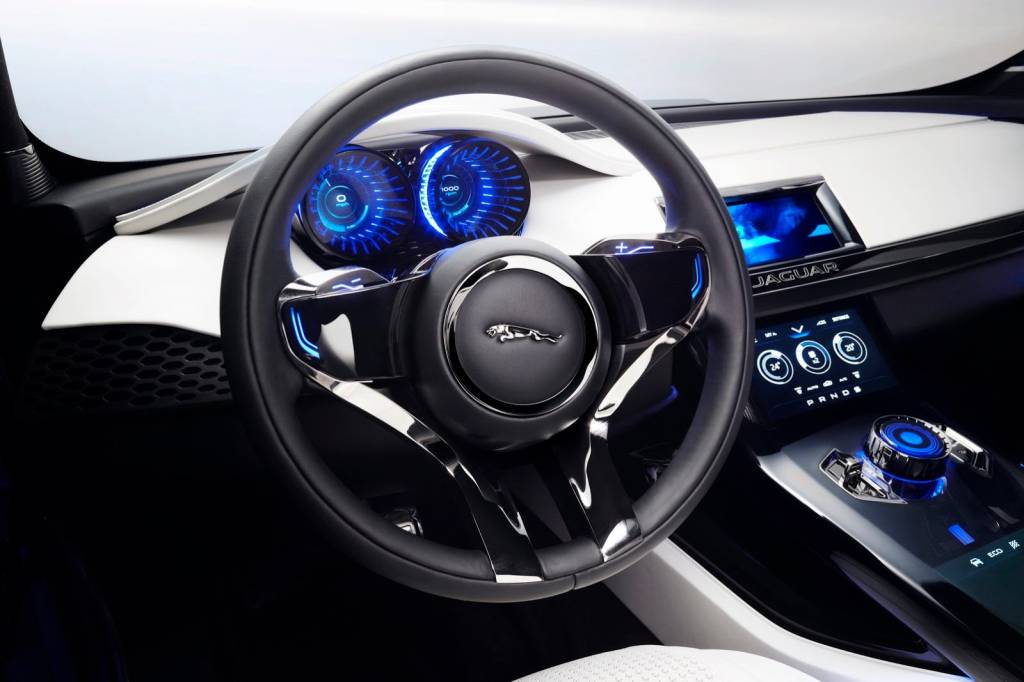
Jaguar C-X17 Concept Car


SUV from Jaguar


Jaguar plans to produce SUVs and C-X17 concept is on display at the Frankfurt Motor Show 2013, some time ago. Maybe there is a thought, a British car manufacturer Tata Motors shares already purchased, it makes SUVs be counter-productive.


Because, brother of Jaguar, Land Rover is a specialist in the SUV category. However, the off-road enthusiasts will not turn away from Land Rover. And C-X17 will be bought by those who need to conquer the steep crossover, better visibility and comfortable interior space.


There are two interesting things when the tiger jumped bearing the crossover concept that was introduced. First, the C-X17 will enter production line late next year or early 2015. Second, three-fourths, starting from the front, not visible from the CX-17 concept model and replace it with "Advanced Modular Aluminum Archietecture".


Futuristic interior has a clean dashboard, and on board monitor in back seat.


Peugeots new 3008 gets better looks, economy and pricing


  • Enhanced appearance and equipment continue the appeal of the award-winning 3008 Crossover
  • Prices are also enhanced with reductions across the range, making it better value for money than ever
  • HYbrid4 version is a top-of-the-range technical tour-de-force with Auto, Sport, ZEV and 4WD modes

The Peugeot 3008 is the Crossover which turns the traditional industry segments on their heads, combining the best elements of an SUV, hatchback and MPV.


The Peugeot 3008 has been comprehensively restyled, with even greater levels of equipment available as standard. In addition, prices across the range have been lowered, making the popular Peugeot 3008 Crossover even better value for money.

After its world debut at the recent Frankfurt Motor Show, this versatile and desirable family car is now available to order, with first deliveries through UK Peugeot dealerships in January.


Since its launch in 2009, the Peugeot 3008 Crossover has attracted more than 500,000 sales worldwide – exceeding original projections by 50%. Over ten per cent of these, some 56,000, are now on UK roads. It has also won considerable critical acclaim from the motoring press, notably winning the prestigious What Car? ‘Car of the Year’ in 2010, and many other accolades since.

The 3008 Crossover’s unique appeal lies in its considerable practicality and flexibility. Combining the space of an MPV, the practicality and high seating position of an SUV and the convenience and driving dynamics of a hatchback, it ticks all the boxes for the modern family motorist.


The Peugeot 3008 is also a pioneer for more environmentally aware motoring, offering owners the world’s first diesel / electric powertrain in a Crossover. This innovative technology – HYbrid4 – has won over many customers, representing 10% of 3008 sales globally.

From January 2014, all versions of 3008 and the accomplished HYbrid4 version will benefit from extensive mid-life updates with a re-styled appearance. The enhanced visual appeal and new features bring the car into line with recent Peugeot models that include the 208, 2008 and New 308.

The distinctive character of the Crossover’s nose has been redesigned with a bold new grille and fog light surrounds, both edged in chrome. The headlights feature a new LED signature and chromed projector components. On higher trim-level models, the 3008 is specified with Xenon headlights with automatic height and directional adjustment.

Overall, it’s a softer, more modern and visually streamlined nose, and the contemporary feel also extends to the rear of the car. New light clusters feature a dark tint, while the three ‘floating claw’ LED lamps have a sharp new design and appear to emerge from the lamp with a 3D effect.


The 3008 range is offered in a choice of nine colours among which is Ruby Red, a new shade. On the 3008 HYbrid4, six colours are available, now including Shark Grey.

Inside, the ‘Head-Up’ display now features full-colour imagery, with separate shades for different information – white for the vehicle’s current speed, orange for the speed limiter, green for the cruise control and red for the Distance Alert. A new reversing camera also makes manoeuvres easier by displaying the area immediately behind the vehicle.


Specification on the Peugeot 3008 Crossover has been boosted by desirable features which are now standard on Peugeot’s familiar three trim levels – Access, Active and Allure. Bluetooth connectivity for smartphone and music players is now included on every 3008, while electric folding door mirrors have been added to Active models. Peugeot Connect Navigation and the new reversing camera are standard on Allure.

Rather than adding to the price, the revised Peugeot 3008 Crossover is now even better value for money. On-the-road pricing has been reduced by £650 on Access, £550 on Active and £150 on Allure.


A wide range of petrol and diesel models is available, including those with Grip Control for enhanced all-season traction. 3008 Crossover prices start from £16,995 for 1.6-litre VTi 120bhp in Access specification. The diesel models start with the 1.6-litre HDi FAP 115bhp, with emissions of 125g/km at £18,795.  3008 HYbrid4s start from £27,245 with CO2 emissions from just 88g/km, yet offer the on-demand ability to select full Auto, Sport (200bhp), ZEV (Zero Emissions Mode) and 4WD modes. For Company Car users, it also has a BIK rating at the lowest 10% - so another attractive fiscal feature.


The 3008 remains one of the most practical new cars on sale today, with owners loving its versatility. The split tailgate creates an easy-load flat boot floor and the lower section can bear a 200kg load when open. The cargo area can fold to suit endless load requirements, with a three-position boot floor and four securing rings for attaching a luggage net.

The Easy Flat rear bench seat can be folded in a single movement using buttons located in the boot or at the top of the seat back. At the front, the passenger seat folds completely flat for transporting even longer loads.